Lyric diction
Ladino diction for singers: Judaeo-Spanish pronunciation and Sephardic song
Ladino (Judaeo-Spanish) for singers: how it relates to Spanish, its vowels and consonants, dialect differences, spelling and the borrowed-melody tradition.
By Diction Desk editors · Published · Updated · Checked against 5 sources
Ladino, also called Judaeo-Spanish, Judezmo or Spaniolit, is a Romance language derived from Castilian Old Spanish1. Its grammar, phonology and about 60% of its vocabulary are essentially Spanish, with 5 vowels and 24-26 consonants depending on the dialect1. Singers should expect pronunciation to differ from community to community2.
- Other names
- Judaeo-Spanish, Judezmo, Spaniolit1
- Vowels
- 51
- Consonants
- 24-26, depending on the dialect1
- Shared with Spanish
- Grammar, phonology and about 60% of the vocabulary1
- Written in
- Mainly the Latin alphabet today; historically Rashi script and Solitreo1
Contents
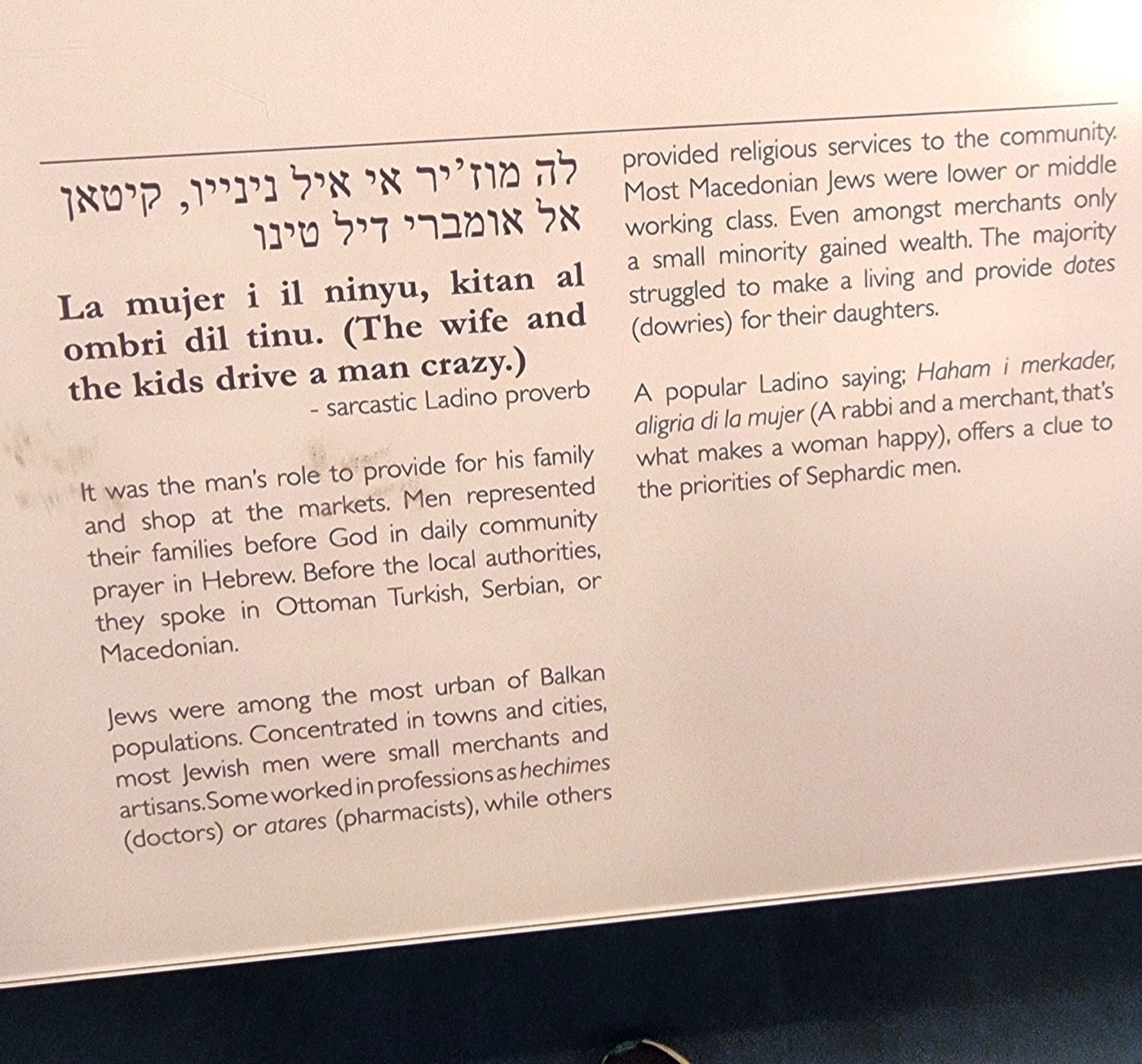
Ladino has no single standard pronunciation, so a singer has to choose one. This page sets out the vowels, consonants and spellings by dialect, then the songs and texts of the repertoire. The other languages are in the diction section.
What Ladino is
Judaeo-Spanish is also known as Ladino, Judezmo or Spaniolit, and is a Romance language derived from Castilian Old Spanish1. Most speakers from westernized Turkish or Israeli society prefer the name Ladino, and in Israel Hebrew speakers usually call the language Ladino1.
Historically the Rashi script and its cursive form Solitreo were the main orthographies; today the language is mainly written with the Latin alphabet1. In the Hebrew script a silent aleph must precede word-initial vowels1.
Where the language comes from
Sephardic Jews have spoken Ladino since they were expelled from the Iberian Peninsula1. Most Iberian Jews resettled in the Ottoman Empire after the 1490s expulsion from Spain and Portugal1. Judaeo-Spanish was the common language of Salonica during the Ottoman period1. The famous Ladino translation of the Bible, the Biblia de Ferrara, dates from 15531.
The language today is under serious threat of extinction1. In 2017 the Royal Spanish Academy announced plans to boost its conservation1.
How close it is to Spanish
The grammar, the phonology and about 60% of the vocabulary of Judaeo-Spanish are essentially Spanish1. For the base rules, read Spanish diction for singers first.
The phoneme count varies by dialect: 24-26 consonants and 5 vowels1. The five vowels are close i and u, mid e and o, and open a1. Front rounded vowels appear only in French loanwords, and they do not exist in every dialect1.
Where Ladino differs
| Feature | What happens | Example |
|---|---|---|
| Initial voiceless plosives | Aspirated1 | |
| v | A labiodental v, as in English, rather than a bilabial1 | |
| s | In some dialects pronounced sh before a k sound or at word end1 | seis [seʃ]1 |
| nue- | In some dialects becomes mue-1 | nuevo becomes muevo1 |
| Final o | On Rhodes, pronounced as u1 | |
| Affricate and fricative | The inventory includes separate [d͡ʒ] and [ʒ]1 | |
| b and v | Distinct: b is [b~β], v is [v]1 | bivir [biˈviɾ], “to live”1 |
| Tonic vowels | In some varieties, little or no diphthongization1 | |
| Final s | A tendency to drop [s] at the end of a word or syllable1 |
The trill and the tap are also a question. It is claimed that Judaeo-Spanish does not contrast the trill and the tap, a claim that is not universally accepted1. Some dialects merge the two rhotic phonemes, and speakers typically pronounce the merged sound as a tap1. Most dialects merge /ð~ð̞/ with /d/ and /ħ/ with /x/1.
Spelling and sound
The table lists three spellings from the Latin-script orthography.
| Spelling | IPA | Example |
|---|---|---|
| ch | [t͡ʃ]1 | — |
| dj | [d͡ʒ]1 | djugar [d͡ʒuˈgar], “to play”1 |
| j | [ʒ]1 | jurnal [ʒuɾˈnal], “newspaper”1 |
The first is the affricate and the second the fricative, and the phoneme inventory includes both as separate sounds1. Modern Spanish j, pronounced [x], corresponds to two different phonemes in Old Spanish1; in Judaeo-Spanish, g before e or i remains [d͡ʒ] or [ʒ] rather than [x]1. In basho, “low” or “down,” the sh is [ʃ]1.
Stress follows a simple default. Words that end in a vowel, n, s or sh are paroxytones, meaning the stress falls on the next-to-last syllable1.
There is no single standard
Ladino consonants, vowels and IPA values are by no means a standardized spelling or pronunciation system2. There are exceptions to the rules, and pronunciation differs from community to community2. The tables in Lori Şen’s singers’ guide are a fusion of several sources and her experience in the Turkish Sephardic community2. One of those sources is Joan Wall and others’ Diction for Singers2.
A repertoire built on borrowed melodies
Ladino songs often carry tunes that came from elsewhere. Melodies were often borrowed from surrounding cultures and Ladino lyrics were added to them3. American Sephardic immigrants created new Ladino lyrics for melodies from sources in Turkish, Yiddish, Hebrew, Greek and Arabic3. Contrafact, the process of imposing something new over something extant, was heavily used in the making of Ladino music3.
Songs have long served as a bridge between diverse communities within the geographically dispersed Sephardi diaspora3. Isaac Sene wrote Ladino lyrics for a song and performed it in both Hebrew and Ladino at Sephardic gatherings in the United States3. Jack Mayesh, a popular Greek-Sephardic singer and cantor, owned the Mayesh Phonograph Record Company, the only Sephardic record label in Los Angeles3. “Fel Shara” (1958) is a Sephardic version of an existing melody with exceptionally mixed lyrics, an amalgamation of Arabic, Ladino, Judeo-Italian, Judeo-French, Berber and English3.
Published choral arrangements of Ladino music, the subject of a 2018 University of Washington D.M.A. thesis, reflect features such as the Turkish makam modal system and heterophonic textures4. The UCLA conversation on borrowed melodies is the source for the tradition of added lyrics3.
Lyrics
Ladino song texts range from ancient poems to mixed-language lyrics. In Bruce Adolphe’s Ladino Songs of Love and Suffering, the texts are derived from well-known Ladino folk poetry5. Adolphe retained only the words and discarded the traditional melodies attached to these poems5. In his own note on the piece, he chose the guitar as the perfect instrument for Judeo-Spanish timbres and rhythms, and selected verses from ancient poems that could have been written yesterday5. The work was premiered on November 28, 1984, at Alice Tully Hall, Lincoln Center5.
Mixed-language texts exist: the lyrics of “Fel Shara” are an amalgamation of Arabic, Ladino, Judeo-Italian, Judeo-French, Berber and English3.
Sung versus spoken
The Ladino diction guide for singers was written to help singers who would like to perform this repertoire2. Its consonants, vowels and IPA transcriptions are by no means an attempt to achieve a standardized spelling or pronunciation system2. Voiceless plosives in initial position have aspiration1, and some varieties show little or no diphthongization of tonic vowels1.
Common mistakes for English and Spanish speakers
- Assuming one standard. Pronunciation differs from community to community, with exceptions to the rules2.
- Pronouncing v as a bilabial. It is a labiodental v, as in English1.
- Pronouncing every s as [s]. In some dialects it is [ʃ] before a k sound or at word end, as in seis [seʃ]1.
- Merging dj and j. The inventory includes separate [d͡ʒ] and [ʒ]1.
- Reading final o as o everywhere. On Rhodes, a word-final o is pronounced as u1.
- Expecting a trill and tap contrast. It is claimed that Judaeo-Spanish does not contrast them, though the claim is not universally accepted1.
Preparing a Ladino song
- Identify the community behind the text, since pronunciation differs from community to community2.
- Check s before k sounds and at word end, nue- words and final o, since these shift by dialect1.
- For IPA transcription, see how to transcribe an aria into IPA.
It is difficult for conductors to acquire the knowledge necessary to inform their singers and audiences about Ladino music4. See what a diction coach does.
Read next
Spanish diction for singers: five vowels, b d g, tap and trill, seseo and yeismo
Spanish lyric diction in one page: the five pure vowels, soft b d g, the tap and the trill, c and z, ll and y, and Castilian versus Latin American choices.
Lyric dictionItalian diction for singers: vowels, consonants, IPA and double-consonant rules
Italian lyric diction in one page: the 7 vowels, open and closed E and O, the c and g rules, gli, gn, sc, double consonants and the rolled r.
Lyric dictionIPA for singers: what the International Phonetic Alphabet is and how to use it
The International Phonetic Alphabet for singers: why one symbol equals one sound, the marks that matter, singers' charts and where to find IPA texts.
Questions singers ask
Is Ladino the same as Spanish?
No, but they are close. Ladino is a Romance language derived from Castilian Old Spanish, and its grammar, phonology and about 60% of its vocabulary are essentially Spanish1. It has differences of its own, such as separate [dʒ] and [ʒ] sounds1.
How many vowels does Ladino have?
The phonemic inventory consists of 24-26 consonants and 5 vowels, and the exact number of phonemes varies by dialect1. Front rounded vowels appear only in French loanwords, and not in every dialect1.
Is there one standard Ladino pronunciation for singers?
No. The consonants, vowels and IPA values in a singers' guide to Ladino diction are not an attempt at a standardized spelling or pronunciation system, and exceptions and community differences exist2.
Sources
- Judaeo-Spanish · Wikipedia · en.wikipedia.org · checked 19 October 2026
- Ladino Lyric Diction Guide (Lori Şen, Sephardic Art Song) · Lori Şen, D.M.A. · lorisen.com · checked 19 October 2026
- Borrowed Melodies (Milken Center conversation by Simone Salmon) · UCLA Herb Alpert School of Music · schoolofmusic.ucla.edu · checked 19 October 2026
- Informed and Informative: New Choral Arrangements of Sephardic Music (UW thesis record) · University of Washington Libraries · digital.lib.washington.edu · checked 19 October 2026
- Ladino Songs of Love and Suffering (liner notes by Neil W. Levin) · Milken Archive of Jewish Music · milkenarchive.org · checked 20 October 2026
Image credits (1)
- Wikimedia Commons contributor · CC BY-SA 4.0 · source

Translations of libretto lines on this page are our own. How we check facts · Report an error.